


Last updated: 25 November 2026 · Data: ten years of daily DAX prices from Xetra (23.11.2016–20.11.2026), DTF calculations.
The risk of not being able to close a CFD position at your price is highest when the underlying market is closed or thin: over weekends and holidays, overnight outside the main session, around major data releases and central bank decisions, and when trading in a stock is suspended. A stop-loss order then fills at the first available price, not at your level. In ten years of DAX data, Monday’s open was at least 1% away from Friday’s close on 13.7% of weekends (roughly one Monday in seven) and at least 2% away on 4% of weekends.
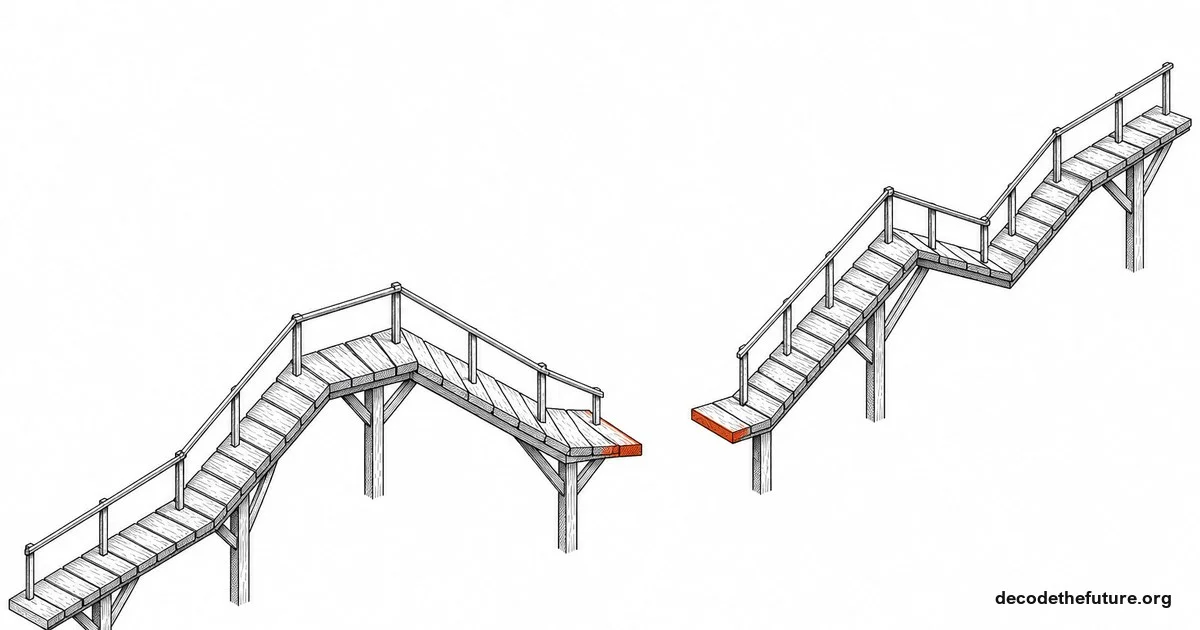
On Friday 4 April 2025 the DAX closed at 20,641.72. Picture a long CFD on the index with a stop at 20,000, 3.1% below the close. A sensible stop. On Monday 7 April the index opened on Xetra at 18,751.75, 9.16% lower. The market never traded through 20,000. It jumped over it.
A stop-loss is not a guaranteed price. It is an instruction to close once the price reaches a level, and if there is no price at that level, the order fills at the next one. Had the position closed near the open, the loss would have been about 1,890 points instead of the planned 640. Almost three times larger, with nobody doing anything wrong.
This is not investment advice. CFDs are leveraged products and most retail accounts lose money on them; EU brokers must publish that share in their risk warning. We describe how the risk works and measure it on historical data. Past gaps do not tell you what the next ones will look like.
When is it hardest to close a CFD position?
The textbook answer, and the one broker knowledge tests expect, is “when liquidity is low”. In practice that means a handful of specific situations:
- Weekends and public holidays. The underlying market is shut for two days or more while news keeps coming. On Monday the price starts where the market reprices it, not where your stop sits.
- Overnight. Index CFDs may trade almost around the clock, but outside the main session there are fewer orders, wider spreads and jumpier prices.
- Data releases and central bank decisions. For a few seconds or minutes after an announcement there may be almost nobody on the other side. That is slippage.
- Trading halts. On single-stock CFDs, if the exchange suspends the share, your broker usually will not let you close until trading resumes.
- Illiquid instruments. Exotic currency pairs, small caps, some crypto. The spread is wide even on a quiet day.
How often does price jump over a stop? Ten years of the DAX
We took daily DAX prices for the last ten years and, for every session, measured the gap: the percentage difference between the open and the previous close. We split the opens into two groups: after a normal night and after a weekend or holiday (at least three days without a session).
Translated into a calendar:
- a gap of 1% or more happens on roughly one Monday in seven and one normal night in eleven,
- a gap of 2% or more: one weekend in 25, but only one night in 61,
- 14 of the 21 weekend gaps above 2% were to the downside.
So weekends are not a little worse than nights. For large gaps they are more than twice as bad.
The largest DAX weekend gaps of the last ten years
| Monday | Friday close | Open | Gap | Context |
|---|---|---|---|---|
| 7 Apr 2025 | 20,641.72 | 18,751.75 | −9.16% | US tariffs announced on 2 April, global sell-off |
| 9 Mar 2020 | 11,541.87 | 10,690.08 | −7.38% | COVID-19 and the collapse of the OPEC+ deal, oil price war |
| 16 Mar 2020 | 9,232.08 | 8,728.48 | −5.45% | pandemic; on Sunday the Fed cut rates to zero |
| 23 Mar 2020 | 8,928.95 | 8,536.33 | −4.40% | pandemic, more lockdowns in Europe |
| 6 Apr 2020 | 9,525.77 | 9,889.03 | +3.81% | rebound after the March panic |
| 7 Mar 2022 | 13,094.54 | 12,614.08 | −3.67% | war in Ukraine, oil and gas price spike |
Gaps cut both ways. Three days after the April crash, on 10 April 2025, the DAX opened 7.81% higher after the 90-day tariff pause was announced. Anyone who had shorted the first drop got that gap in the face.
What a gap does to your margin
A gap alone is not a disaster. Leverage makes it one. At 20:1 your margin is 5% of the position, so every 1% move against you costs 20% of the margin. The chart assumes the simplest case: the account holds exactly the required margin and nothing more.
Since 2018, ESMA rules for retail clients across the EU cap leverage (30:1 on major currency pairs, 20:1 on other pairs, gold and major indices, 10:1 on commodities and minor indices, 5:1 on single stocks, 2:1 on crypto) and require brokers to close positions once equity falls to half of the required margin. That close-out only works if the market moves through it step by step. At 20:1 half the margin is gone after a 2.5% move and all of it after 5%. The April 2025 gap jumped over both thresholds at once.
What remains is negative balance protection, also part of the ESMA rules: you cannot end up owing the broker money. It protects you from debt, not from a zeroed account. Before you trade, also check how stop orders work in detail in our guide to market, limit and stop orders.
When there is no price at all: the franc in 2015 and oil in 2020
On 15 January 2015 the Swiss National Bank dropped the 1.20 floor on EUR/CHF. Within minutes the rate fell well below 1.00. Stops on franc pairs filled hundreds of pips away or found no price to fill at. The next day Alpari (UK) declared insolvency, because clients were left with negative balances they did not repay.
On 20 April 2020 the WTI spot price at Cushing fell to minus 36.98 dollars a barrel. The May contract was expiring, storage was full and nobody wanted physical oil. A long position lost more than its entire value.
Both happened in markets that normally count as very liquid. Liquidity is not a property of an instrument. It is a state that can vanish within minutes.
What you can do, and what it costs
| Method | What it gives you | What it costs |
|---|---|---|
| Lower leverage than the maximum | a 5% gap takes 25% of margin at 5:1 instead of 100% at 20:1 | more capital for the same position |
| Closing or cutting positions before the weekend | avoids weekend gaps, which are more than twice as common for big moves | you also miss gaps in your favour and pay the spread again |
| Guaranteed stop-loss | the broker fills exactly at your level, even through a gap | an extra fee, offered by only some brokers, often with a minimum distance |
| Economic calendar and trading hours | you know when the underlying is shut or data is due | time; no help against unscheduled news |
| No single-stock CFDs into earnings | avoids post-earnings gaps | you give up the move you may have been waiting for |
Crypto is the exception in the other direction. Bitcoin trades 24/7, so it barely gaps: in our data the open differed from the previous close by 1% or more on only 0.3% of days. But it moves over the weekend: from Friday’s close to Monday’s open it changed by 2% or more on 40% of weekends. No gap does not mean no risk, as we explain in crypto CFDs explained. New to the instrument? Start with what a CFD is and how it differs from stocks and ETFs.
How we calculated it
Source: daily DAX prices (Xetra, symbol ^GDAXI on Yahoo Finance) from 23 November 2016 to 20 November 2026, 2,536 sessions. Gap = open ÷ previous close − 1. “After a weekend or holiday” means at least three calendar days between sessions. Caveat: the cash DAX trades 9:00–17:30, while DAX CFDs at many brokers trade longer and follow futures, so part of the move shows up earlier and the CFD’s own gap can be smaller. Over the weekend futures are closed too, which is the gap our data captures best. We left out futures and currency pairs because continuous daily series contain artificial jumps at contract rolls.
Frequently asked questions
When is the risk of being unable to close a CFD position highest?
When the underlying market is closed or illiquid: weekends and holidays, overnight outside the main session, around major data releases and central bank decisions, during trading halts and in thinly traded instruments. Price can then jump past your stop-loss level.
Does a stop-loss protect against a price gap?
A standard stop does not. If price jumps past the level, the order fills at the first available price, often a worse one. Only a guaranteed stop-loss, which brokers charge extra for, fills exactly at your level.
How often do weekend gaps happen?
In DAX data for 2016–2026, Monday’s open differed from the previous close by at least 1% on 13.7% of weekends and by at least 2% on 4%. After a normal night the figures were 9.3% and 1.6%.
Can I lose more than I deposited with CFDs?
Not as a retail client of an EU broker. Negative balance protection has applied since 2018. You can still lose your whole margin, and a large gap can do that faster than the automatic close-out at 50% of required margin.
What is the maximum CFD leverage in the EU?
For retail clients: 30:1 on major currency pairs, 20:1 on other pairs, gold and major indices, 10:1 on commodities and minor indices, 5:1 on single stocks and 2:1 on cryptocurrencies. A broker may offer less, but not more.
Before you hold a leveraged position into Friday’s close, ask one question: how much of your margin would the gap from the table above take if it happened this Monday?
Sources
- ESMA — ESMA agrees to prohibit binary options and restrict CFDs to protect retail investors (27.03.2018).
- Swiss National Bank — press release of 15.01.2015 discontinuing the minimum EUR/CHF exchange rate.
- Wikipedia — Alpari Group: Alpari (UK) insolvency on 16.01.2015 and special administration from 19.01.2015.
- Federal Reserve — statement of 15.03.2020 cutting the federal funds rate to 0–0.25%.
- U.S. EIA — Cushing, OK WTI Spot Price FOB, daily (20.04.2020: −36.98 USD/bbl).
- Yahoo Finance — DAX Performance Index (^GDAXI) historical prices; DTF calculations of 23.11.2026.
Data and sources checked on 23 November 2026.