


Last updated: April 2026
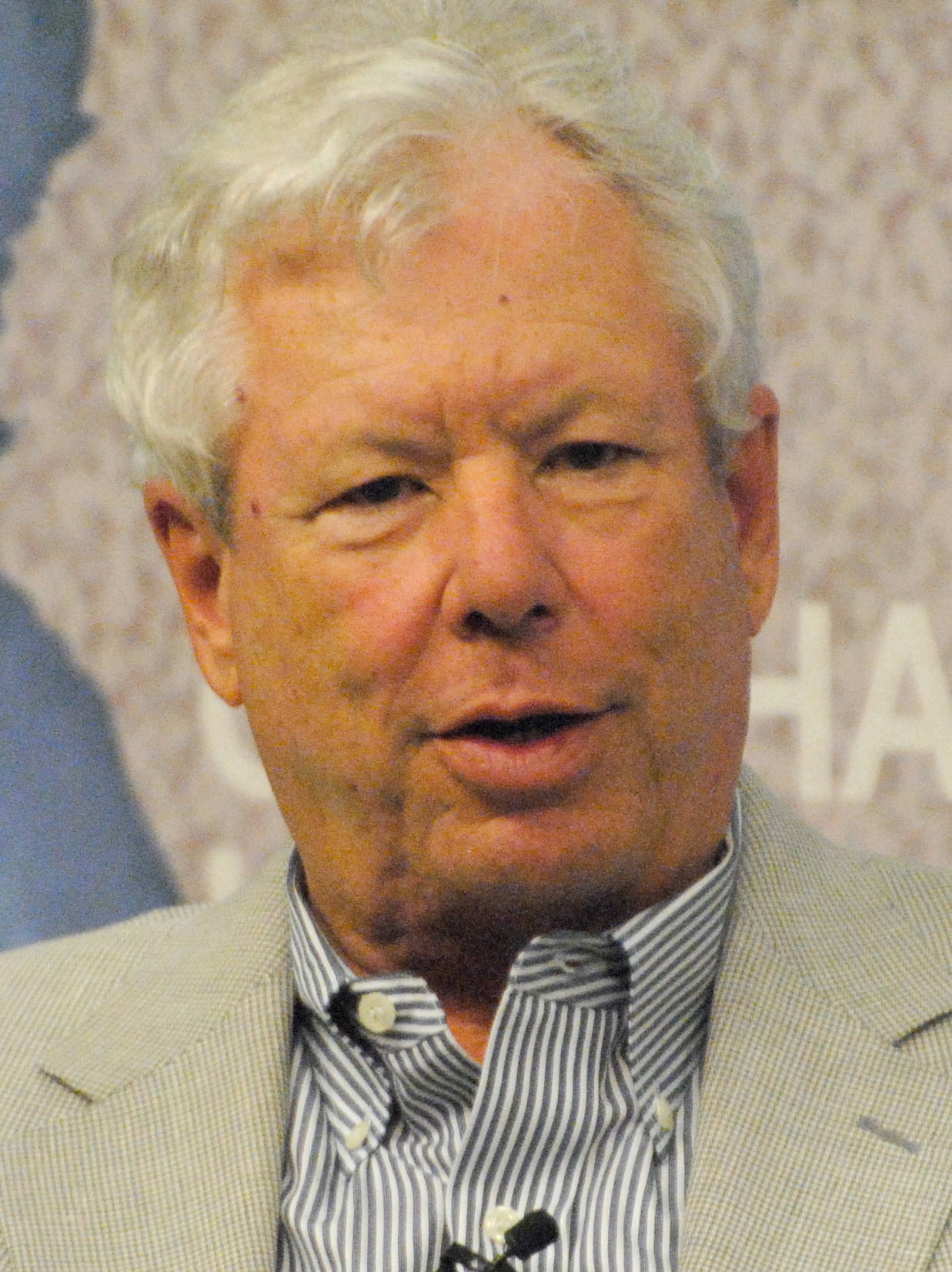
Richard H. Thaler (b. 1945) is an American economist at the University of Chicago Booth School of Business and the 2017 recipient of the Nobel Memorial Prize in Economic Sciences. He is the founder of modern behavioral economics and, with legal scholar Cass Sunstein, coined the term nudge — a small change in choice architecture that predictably shifts behavior without restricting options. His four core ideas — mental accounting (1980–1999), the endowment effect (1990), myopic loss aversion (1995), and Save More Tomorrow (2004) — have reshaped pension design, public policy, and retail regulation in the US, UK and EU, and in 2023–2025 they became the scaffolding for a new research field asking whether large language models display the same behavioral biases as humans.
Who is Richard Thaler?
Richard H. Thaler is the Charles R. Walgreen Distinguished Service Professor of Behavioral Science and Economics at the University of Chicago Booth School of Business, where he has taught since 1995. Before Chicago he held positions at Cornell (1978–1995) and the University of Rochester (1974–1978). In 2015 he served as president of the American Economic Association. In 2017 the Royal Swedish Academy of Sciences awarded him the Nobel Memorial Prize in Economic Sciences “for his contributions to behavioural economics” — the first time the prize was given for a body of work built on the systematic study of how humans actually decide, rather than how rational-choice models assume they should.
Thaler’s public identity is unusual for a Nobel laureate: he appeared in a cameo in The Big Short (2015) explaining the hot-hand fallacy at a blackjack table, he writes a popular trade book (Misbehaving, 2015) as readable as any bestseller, and his early career was spent fighting a now-famous rearguard action against colleagues at Chicago who treated the idea of predictable human irrationality as a category mistake. That backstory matters for how the discipline is practised in 2026: Thaler did not arrive with a single model; he arrived with a catalogue of observations that mainstream microeconomics had to absorb — or keep ignoring at the cost of its empirical relevance.
The four ideas that reshaped economics
Thaler’s contribution is best read as four distinct ideas accumulated across roughly three decades. Each one opened a sub-field, each one is now routinely taught in introductory microeconomics, and each one has at least one production-scale public-policy implementation.
1. Mental accounting (1980, 1999)
People do not treat money as fungible. A dollar won on a scratch card is spent more freely than a dollar earned from salary; a tax refund feels like a windfall even though it is simply deferred income. Thaler’s Toward a Positive Theory of Consumer Choice (1980, Journal of Economic Behavior & Organization) and the synthesising paper Mental Accounting Matters (1999, Journal of Behavioral Decision Making) describe how households mentally partition money into non-fungible categories (gas budget, grocery budget, vacation fund) and how this partitioning produces systematic deviations from the neoclassical prediction.
The operational consequence is large. Mental accounting is why US tax-preparation companies (Intuit, H&R Block) can profitably sell refund-anticipation products at rates that look extortionate on paper: the taxpayer treats the refund as found money, not as income already earned. It is also why behavioural finance asset-price anomalies survive — retail investors treat house-money gains and original capital as different mental buckets, which breaks the Merton-style portfolio optimisation most textbooks still teach.
2. The endowment effect (1990)
In the canonical experiment run by Kahneman, Knetsch and Thaler (1990, Journal of Political Economy), Cornell undergraduates were randomly given university-branded coffee mugs. Sellers demanded roughly twice as much to part with a mug as buyers were willing to pay for the same mug. The gap — typically 2× — is the endowment effect: merely owning an object raises its psychological value above its market value. The experiment has been replicated hundreds of times; a 2023 meta-analysis in the Journal of Economic Psychology (Morewedge et al.) places the pooled effect size at roughly d = 0.6 across 176 studies, with moderators including object type (consumer goods yes; lottery tickets weaker) and elicitation method.
The endowment effect is what makes housing markets sticky downwards — sellers anchor on their reservation price even when comparables are falling — and what gives incumbent software vendors pricing power (customers overvalue the tool they already have). It also interacts with loss aversion, since parting with the mug is coded as a loss while receiving the mug is coded as a gain.
3. Myopic loss aversion (1995)
Benartzi and Thaler (1995, Quarterly Journal of Economics) proposed myopic loss aversion as an explanation of the equity premium puzzle — the long-standing observation that US stocks have delivered about 6 percentage points more than Treasury bills per year over the last century, a premium too large to justify under standard consumer-preferences models. The mechanism: investors evaluate their portfolios too frequently (myopia), and because losses hurt roughly twice as much as equivalent gains feel good (Kahneman-Tversky loss aversion), frequent evaluation makes volatile equities feel unbearable even over long horizons.
The direct prescription — evaluate your long-horizon portfolio less often — is the single most actionable piece of behavioral-finance advice a retail investor can apply, and it is why 401(k) plan dashboards increasingly default to annual rather than daily return displays. The empirical follow-ups (Gneezy & Potters 1997; Haigh & List 2005 with professional traders) reproduce the core effect, though with smaller magnitudes for experienced market participants.
4. Save More Tomorrow and nudge (2004, 2008)
The final idea — which made Thaler a household name — is a prescription disguised as a description. In Save More Tomorrow (Benartzi & Thaler, 2004, Journal of Political Economy) the authors report results from a mid-sized Midwestern manufacturing firm that auto-enrolled employees into a 401(k) plan where contribution rates escalated automatically at every future raise. Average savings rates for SMarT participants rose from 3.5% to 13.6% over 40 months. The plan became the template for the US Pension Protection Act of 2006 and for UK auto-enrolment legislation in 2012 — which together now cover over 70 million workers across the two jurisdictions.
The broader generalisation, published with legal scholar Cass Sunstein as Nudge (Yale UP, 2008), argues that choice architecture — the design of the decision environment — can never be neutral, so designers should actively choose defaults that benefit the chooser without removing options. This is “libertarian paternalism”, and it is the intellectual spine of the nudge movement that swept government practice in the 2010s.
The 2017 Nobel Prize — what the committee actually said
The 2017 Nobel citation highlighted three specific contributions: limited rationality (mental accounting, the planner-doer model), social preferences (fairness in market pricing, the dictator-game literature), and lack of self-control (myopic loss aversion, SMarT). The committee’s scientific background document is unusual in one respect — it spends substantial text defending the programme itself against the charge that behavioural economics is merely a “taxonomy of exceptions”. The committee’s answer is that Thaler’s work made it possible to build empirically grounded models that predict previously anomalous behaviour, which is exactly what a science should do.
Thaler’s widely-shared response to the $1.1 million prize — “I intend to spend it as irrationally as possible” — is itself a small piece of behavioural instruction: the reporter’s question treated the prize money as fungible, and Thaler’s answer reminds the reader that it isn’t.
Nudge in practice — five large-scale applied examples
1. UK Behavioural Insights Team (BIT) — HMRC tax reminders
The UK government’s Behavioural Insights Team, founded 2010, ran a randomised trial for HM Revenue & Customs on late-tax letter wording. Adding the sentence “most people in your local area have already paid” to delinquency letters raised on-time payment rates by about 15 percentage points in the treatment arm (Hallsworth, List, Metcalfe & Vlaev, Journal of Public Economics 2017). The intervention cost effectively zero per letter; the additional tax revenue collected in a single year reportedly exceeded GBP 200 million.
2. US Save More Tomorrow at Vanguard and TIAA
SMarT escalation is now the dominant plan design at Vanguard (the largest US 401(k) provider), TIAA (the dominant provider in higher education), and Fidelity. Vanguard’s 2024 How America Saves report cites that 59% of its plan sponsors use auto-escalation by default — a direct implementation of the Benartzi-Thaler architecture. Average deferral rates for auto-enrolled participants have risen roughly 2.5 percentage points since 2010.
3. Organ-donor defaults — opt-in vs opt-out across the OECD
Johnson and Goldstein (2003, Science) compared effective organ-donor consent rates across countries with opt-in defaults (Germany: 12%) versus opt-out defaults (Austria: 99%). The gap is not driven by cultural attitudes; surveys of stated preference match across the two clusters. It is driven by the default. Within the US, the pattern is jurisdiction-level: Alaska and Hawaii have experimented with default design changes at the DMV licence-renewal stage, while most US states remain opt-in and sit near the bottom of the OECD donor-rate league. The policy lever is small; the public-health consequence is counted in lives.
4. School meal defaults — Just & Wansink
Just and Wansink’s Smarter Lunchrooms work at Cornell Food and Brand Lab (2009–2015) showed that moving fruit to eye level at cafeteria entrances, or rebranding vegetables with descriptive names (“power peas”), shifted selection rates by 15–40% across hundreds of US schools. Some of the original Wansink studies were later retracted for data issues, but the core default effect has been reproduced in independent work (Hanks et al., 2012) and remains a staple of public-health nudge toolkits in the UK and EU.
5. COVID vaccination defaults — 2021–2022
A cluster of 2021–2022 randomised trials (Dai et al. Nature 2021; Milkman et al. PNAS 2022) showed that making a vaccination appointment the default (patient is pre-scheduled and must opt out) raised uptake by roughly 11 percentage points over a standard appointment invitation. The mechanism is pure Thaler-Sunstein: no option is removed, the choice architecture is redesigned, and the default does the work.
The 2022–2023 nudge critique — the honest middle
Three papers recalibrated the field between 2022 and 2023, and a responsible account of Thaler’s legacy has to include them.
| Paper | Effect size reported | What it challenges |
|---|---|---|
| DellaVigna & Linos (2022, QJE) — “Rcts to scale” | Academic nudge trials: +33.4% vs control. Real-world government nudge units: +8.1%. | Publication selection; external validity of canonical BIT/OECD results. |
| Maier et al. (2022, PNAS) — meta-analysis re-estimate | Publication-bias-corrected pooled effect d ≈ 0.08, down from 0.43 in the original Mertens et al. 2022 PNAS meta-analysis. | Whether nudges “work on average” once p-hacking and file-drawer are corrected. |
| Chater & Loewenstein (2023, BBS) — “The i-frame is a trap” | Argues nudge focus on individual (“i-frame”) crowded out systemic (“s-frame”) interventions that move larger welfare. | The political economy of nudge itself — attention as a zero-sum resource. |
The steel-man synthesis is not “nudges don’t work”; it is “nudges work smaller than advertised, especially outside the lab, and they often substitute for more powerful interventions that governments should not be free to skip”. Thaler himself has addressed the publication-bias question directly — in the 2023 Annual Review of Psychology he conceded the Maier re-estimate was fair and argued the policy case for SMarT-style defaults rests on mechanism evidence, not on pooled meta-effects.
Thaler meets LLMs — does GPT-4 display endowment effect?
A new research programme started in 2023 with John Horton’s NBER working paper Large Language Models as Simulated Economic Agents (WP 31122). Horton replicated classic behavioural experiments — dictator games, ultimatum bargaining, endowment effect — on GPT-3.5 and GPT-4, and reported that the models reproduce roughly the same qualitative biases human subjects show, including loss aversion, anchoring and, yes, the endowment effect.
Three follow-ups sharpen the finding:
- Chen, Andiappan, Jenkin & Ovchinnikov (2023, arXiv 2305.07970) test GPT-3.5 on Kahneman-Tversky framing problems and find the model displays risk-aversion for gains / risk-seeking for losses in 80%+ of prompts — the Prospect Theory signature.
- Ross, Kim & Lupyan (2024, PNAS) test GPT-4 on 32 cognitive biases including the endowment effect; results vary strongly with temperature, prompt phrasing, and whether the model is explicitly prompted to “act as” an economic agent. Effects shrink sharply under 2025 reasoning-mode models.
- Brand, Israeli & Ngwe (2024, HBS WP 23-062) use LLM-simulated consumers to estimate willingness-to-pay in conjoint surveys and report correlation 0.7–0.9 with real human panels, opening a practical path for preference elicitation at a fraction of survey cost.
The research programme is not settled. But the operational implication for any engineer deploying LLM agents in consumer-facing decisions (recommendation, pricing, underwriting — see our piece on AI credit scoring) is that the model will import the behavioural biases of its training corpus, including the ones Thaler catalogued, unless explicitly debiased at inference time.
A personal take — Thaler on the trading desk
I trade CFDs on Plus500 (mainly gold) as a practical sanity-check for how real markets price risk. Thaler’s framework shows up in three ways I can point to concretely. First, the disposition effect documented by Odean (1998, JF) — retail traders realise gains too early and losses too late — is pure mental-accounting plus loss aversion, and it is the single most expensive bias a beginner trader will encounter. The structural remedy is pre-commit stop-losses that close the mental account automatically. Second, myopic loss aversion reframes daily P&L watching as harmful: professional funds that report monthly rather than daily outperform on risk-adjusted returns (Haigh & List 2005). Third, anchoring combines with loss aversion on entry — traders anchor on entry price and resist writing down a losing position, which SMC liquidity grabs systematically exploit.
None of this is hypothetical. It is Thaler’s observations applied one floor below the hedge fund, where the position size is small enough that the bias is visible and large enough that the cost is real.
Why Richard Thaler matters in 2026
Thaler’s legacy in 2026 rests on three load-bearing beams. First, the mainstream microeconomic toolkit now routinely incorporates behavioural parameters — loss aversion coefficients in asset pricing, default effects in pension design, present-bias discount rates in health policy — that were fringe in 1980 and required arguing against the department in 1995. Second, the policy architecture of the US Pension Protection Act, UK auto-enrolment, EU consumer-disclosure rules and the Omnibus Directive all trace directly to his work, reaching over 200 million workers and consumers. Third, and newly, the LLM behavioural-economics programme launched by Horton in 2023 has turned Thaler’s catalogue into a toolkit for auditing AI systems — a use that neither he nor Kahneman could have anticipated in the mug experiments of 1990.
For further reading, DTF has covered the behavioural economics cluster in depth. Start with loss aversion, move to anchoring, and finish with the applied regulatory layer in AI credit scoring. For Polish-speaking readers, the paired PL version lives at richard-thaler.
Frequently asked questions (FAQ)
Who is Richard Thaler?
Richard H. Thaler (b. 1945) is an American economist at the University of Chicago Booth School of Business and the 2017 recipient of the Nobel Memorial Prize in Economic Sciences. He is the founder of modern behavioral economics and, with legal scholar Cass Sunstein, coined the term “nudge”.
Why did Richard Thaler win the Nobel Prize?
Thaler was awarded the 2017 Nobel Memorial Prize “for his contributions to behavioural economics”, cited in three specific areas: limited rationality (mental accounting, planner-doer models), social preferences (fairness in market pricing), and lack of self-control (myopic loss aversion, Save More Tomorrow). The prize recognised the integration of psychologically realistic behaviour into economic models and the resulting policy applications.
What is mental accounting in simple terms?
Mental accounting is the observation that people do not treat money as fungible — they mentally partition it into categories (salary, bonus, tax refund, lottery winnings) and spend each category by different rules. A dollar won feels different from a dollar earned. Thaler documented this in a 1980 JEBO paper and synthesised two decades of evidence in his 1999 JBDM article “Mental Accounting Matters”.
What is the endowment effect?
The endowment effect is the finding that people demand roughly twice as much to give up an object as they would pay to acquire it — merely owning something raises its psychological value. Kahneman, Knetsch and Thaler documented it in the 1990 Cornell mug experiments (Journal of Political Economy). A 2023 meta-analysis of 176 studies places the pooled effect at Cohen’s d ≈ 0.6.
What is Save More Tomorrow (SMarT)?
Save More Tomorrow is a retirement-savings plan design by Benartzi and Thaler (2004, JPE) in which employees pre-commit to escalate their 401(k) contribution rate automatically at every future pay raise. In the original field trial, average savings rates rose from 3.5% to 13.6% over 40 months. It is now the default architecture at Vanguard, TIAA and Fidelity, and the template for the 2006 US Pension Protection Act and 2012 UK auto-enrolment.
Does nudge theory actually work?
Yes, but smaller than earlier meta-analyses suggested. Maier et al. (PNAS 2022) recalculated the pooled effect size of nudge interventions at Cohen’s d ≈ 0.08 after publication-bias correction, down from the 0.43 reported by Mertens et al. earlier the same year. DellaVigna & Linos (QJE 2022) show government nudge units deliver roughly +8% outcomes on average vs +33% in academic trials. Mechanism-based defaults (Save More Tomorrow, organ-donor opt-out) remain robust; broader claims require caution.
Can LLMs like GPT-4 display behavioural biases from Thaler’s framework?
Yes, under most prompt conditions. Horton (NBER WP 31122, 2023) replicated classical behavioural experiments — dictator games, endowment effect, loss aversion — on GPT-3.5 and GPT-4 and reported that the models reproduce the qualitative signatures human subjects show. Ross, Kim & Lupyan (2024, PNAS) find effect sizes are sensitive to temperature and prompt phrasing, and shrink in reasoning-mode models from 2025. Engineers deploying LLMs in consumer-facing decisions should assume behavioural biases are imported from the training corpus unless explicitly debiased.
Bibliography
- Thaler, R. H. (1980). Toward a Positive Theory of Consumer Choice. Journal of Economic Behavior & Organization, 1(1), 39–60.
- Thaler, R. H. (1985). Mental Accounting and Consumer Choice. Marketing Science, 4(3), 199–214.
- Kahneman, D., Knetsch, J. L., & Thaler, R. H. (1990). Experimental Tests of the Endowment Effect and the Coase Theorem. Journal of Political Economy, 98(6), 1325–1348.
- Benartzi, S., & Thaler, R. H. (1995). Myopic Loss Aversion and the Equity Premium Puzzle. Quarterly Journal of Economics, 110(1), 73–92.
- Thaler, R. H. (1999). Mental Accounting Matters. Journal of Behavioral Decision Making, 12(3), 183–206.
- Benartzi, S., & Thaler, R. H. (2004). Save More Tomorrow: Using Behavioral Economics to Increase Employee Saving. Journal of Political Economy, 112(S1), S164–S187.
- Thaler, R. H., & Sunstein, C. R. (2008). Nudge: Improving Decisions About Health, Wealth, and Happiness. Yale University Press.
- Thaler, R. H. (2015). Misbehaving: The Making of Behavioral Economics. W. W. Norton & Company.
- Nobel Prize in Economic Sciences 2017 — Official citation and scientific background
- Johnson, E. J., & Goldstein, D. G. (2003). Do Defaults Save Lives? Science, 302(5649), 1338–1339.
- Madrian, B. C., & Shea, D. F. (2001). The Power of Suggestion: Inertia in 401(k) Participation and Savings Behavior. Quarterly Journal of Economics, 116(4), 1149–1187.
- Hallsworth, M., List, J. A., Metcalfe, R. D., & Vlaev, I. (2017). The Behavioralist as Tax Collector. Journal of Public Economics, 148, 14–31.
- DellaVigna, S., & Linos, E. (2022). RCTs to Scale: Comprehensive Evidence from Two Nudge Units. Quarterly Journal of Economics, 137(3), 1505–1550.
- Maier, M., Bartoš, F., Stanley, T. D., Shanks, D. R., Harris, A. J. L., & Wagenmakers, E.-J. (2022). No Evidence for Nudging After Adjusting for Publication Bias. PNAS, 119(31), e2200300119.
- Chater, N., & Loewenstein, G. (2023). The i-Frame and the s-Frame: How Focusing on Individual-Level Solutions Has Led Behavioral Public Policy Astray. Behavioral and Brain Sciences, 46, e147.
- Odean, T. (1998). Are Investors Reluctant to Realize Their Losses? Journal of Finance, 53(5), 1775–1798.
- Horton, J. J. (2023). Large Language Models as Simulated Economic Agents: What Can We Learn from Homo Silicus? NBER Working Paper 31122.
- Autorstwa Chatham House – https://www.flickr.com/photos/chathamhouse/19531134028/, CC BY 2.0, Link
[…] money as non-fungible depending on its origin, label, or intended use. The term was coined by Richard Thaler in “Mental Accounting and Consumer Choice” (Marketing Science, 1985) and expanded […]